Your browser does not support CSS. If images appear below, please disregard them.
DollarDaze
Where is the dollar heading? Why are the prices of everything going up while my wages are stagnating? Do deficits matter? Is the price of gold indicative of a market mania? Why is there so much fuss over the Fed?
“No State shall...make any Thing but gold and silver Coin a Tender in Payment of Debts”
- Constitution of the United States, Article 1, Section 10
Home | News Headlines | Article Index | Bullion Dealers | Economic Data | Market Data Feeds | Advertisers | About | Support Us | XHTML
  • If laid end to end in US$1 dollar bills this amount of money would reach what planet from the Sun?

    Click here for the answer
Global Money Supply
  • Global Money Supply Data
Daily Metal Prices
Bullion Dealers
Recommended Books
  • We entrusted the experts with our financial security and now we're reeling from the economic crisis. How do we get back on our feet...and invest wisely?

    In The Wealth Code: How the Rich Stay Rich in Good Times and Bad, financial planner and investment strategist Jason Vanclef delivers straight answers...and solutions.

    Visit the book website at www.thewealthcode.com.

  • Empire of Debt
    Bonner and Wiggin enumerate a long list of chronic ailments that imperil the American financial system--a massive trade deficit, soaring personal and government debt, a housing bubble, runaway military expenditures.
  • The Intelligent Investor
    The classic bestseller by Benjamin Graham, perhaps the greatest investment advisor of the 20th century, The Intelligent Investor has taught and inspired hundreds of thousands of people worldwide.
  • Methods of a Wall Street Master
    This book covers all the important aspects of making money and integrates them into a unifying philosophy that includes economics, Federal Reserve policy, trading methods, risk, psychology, and more.
  • What Has Government Done to Our Money
    If you ever wondered about why prices keep going up, if you ever wondered why cars don't cost $2,000 anymore, if you asked questions like this and never thought you were getting a full answer, this is the book you need to read.
  • Economics for Real People
    Economics for Real People is a clearly-written overview of "Austrian" economics, a libertarian school of economic thought founded by thinkers from Central Europe in the early 20th century.
  • Economics in One Lesson
    "Economics in One Lesson", Henry Hazlet's, book makes a powerful and persuasive argument in favor of a free market economy.
  • The Road to Serfdom
    This classic by one of the 20th century's leading libertarian thinkers has established itself beside the works of Orwell and others as a timeless meditation on the relationship between human freedom and government authority.
  • Crash Proof: How to Profit From the Coming Economic Collapse
    For those accustomed to America's economic dominance, Crash Proof is a frighteningly forthright wake-up call.
 
Printer Version E-Mail Article Discuss

Why a Weak Dollar Hurts U.S. Manufacturers

Euro Pacific Capital

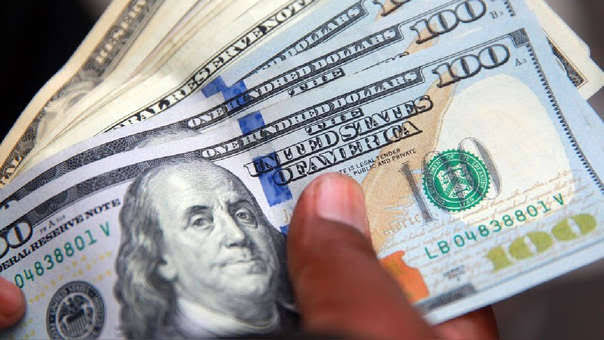
The vast majority of economists are currently hailing the freefall of the dollar as a windfall for American business. While some domestic manufacturers may enjoy some initial benefits from a weaker dollar, they will ultimately suffer many adverse consequences as well. More importantly, the dollar's demise is a disaster for American consumers.

A cheaper dollar helps domestic manufacturers because it makes local costs, such as wages and rents, decline in relation to the costs borne by international competitors. While this is true, it also means that American workers and landlords see a corresponding decline in the real values of their pay and rent. Given that such declines negatively impact living standards, such developments hardly seem worth celebrating.

Too often overlooked however is how the weakening dollar also works to increase costs for domestic manufacturers. A falling dollar raises the costs of raw materials, such as oil and metals, while simultaneously decreasing the relative costs that foreign competitors pay for the same supplies.

But it is not just raw materials prices that rise. Perhaps even more important will be the prices of foreign-made components that are used in American factories. In fact, many American "manufacturers" are really nothing more than assemblers of imported components. For example, take a domestic golf club company that supposedly manufactures clubs in the good old U.S.A. Such a company might import the heads from China, the shafts from Indonesia, and the grips from Mexico. The only thing the American company actually does is put the pieces together. So as the dollar loses value, the costs of importing all of the components will rise, making the finished product more expensive for Americans.

Another often overlooked cost of a weakening dollar is higher interest rates. Because a falling dollar diminishes the global appeal of dollar denominated debt, U.S. interest rates will inevitably rise, resulting in increasing capital costs for domestic manufacturers. Similarly, strengthening foreign currencies increases the appeal of non-dollar debt, reducing the capital costs paid by our foreign competitors.

Furthermore, as a weaker dollar forces up domestic consumer prices, American workers, suffering from declining real incomes, will ultimately press their employers for more generous pay raises. Rising nominal wages will eventually undermine the competitive gains associated with lower real wages that initially resulted from the falling dollar. Similarly, landlords will look to raise rents to make up for the falling purchasing power of their rental income.

Lastly, as rising interest rates and consumer prices combine to exacerbate the severity of the coming recession, federal tax receipts will inevitably decline causing the budget deficit to swell anew. A populist Congress will likely seek to impose even higher taxes on those businesses profiting during the hard times. So any advantages U.S. manufacturers might get from cheaper dollars may be lost to higher taxes.

The bottom line is that true competitiveness comes from sound money, high savings, low taxes, minimal government regulation, hard work, and the entrepreneurial spirit. Laying the hopes of America's industrial salvation on currency devaluation will only backfire, leaving American manufacturers even less competitive in the future than they are today.

_____

© 2007 Peter Schiff

ABOUT THE AUTHOR

Peter Schiff Peter Schiff began his investment career as a financial consultant with Shearson Lehman Brothers, after having earned a degree in finance and accounting from U.C. Berkley in 1987. A financial professional for seventeen years he joined Euro Pacific Capital in 1996 and has served as its President since January 2000. An expert on money, economic theory, and international investing, he is a highly recommended broker by many of the nation's financial newsletters and advisory services.
Disclaimer: The opinions expressed above are not intended to be taken as investment advice. It is to be taken as opinion only and I encourage you to complete your own due diligence when making an investment decision.

This article has been favorited 0 times on DollarDaze.org | Make this your favorite article

Posted in Current Events, Monetary Commentary, Guest Commentary, Peter Schiff

Leave a Comment on this Article
Why a Weak Dollar Hurts U.S. Manufacturers by Peter Schiff

Your Name

Create Password This password is used to make future edits to your comments.

Enter $4926 Enter the green text exactly as it appears.

Comments

1056450
 
Search DollarDaze
  • Add to Technorati Favorites
Your Purchasing Power
  • Click to see full-sized charts
Web Media
  • Aaron Russo Interviews Congressman Ron Paul
  • Excellent video explaining the US Federal Reserve
  • Money As Debt
  • I.O.U.S.A.
  • Chris Martenson - The Crash Course
  • Money - A Brief History of the American Dollar
Sponsored Ads
London Metal Exchange
  • Click to see full-sized charts
Sponsored Ads
Donations Accepted


  • Help support the development of DollarDaze.org by donating today.

    Click here to learn about other ways you can help us.