DollarDaze
Where is the dollar heading? Why are the prices of everything going up while my wages are stagnating? Do deficits matter? Is the price of gold indicative of a market mania? Why is there so much fuss over the Fed?
“No State shall...make any Thing but gold and silver Coin a Tender in Payment of Debts”
- Constitution of the United States, Article 1, Section 10
Home | News Headlines | Article Index | Bullion Dealers | Economic Data | Market Data Feeds | Advertisers | About | Support Us | XHTML
  • If laid end to end in US$1 dollar bills this amount of money would reach what planet from the Sun?

    Click here for the answer
Global Money Supply
  • Global Money Supply Data
Daily Metal Prices
Bullion Dealers
Recommended Books
  • We entrusted the experts with our financial security and now we're reeling from the economic crisis. How do we get back on our feet...and invest wisely?

    In The Wealth Code: How the Rich Stay Rich in Good Times and Bad, financial planner and investment strategist Jason Vanclef delivers straight answers...and solutions.

    Visit the book website at www.thewealthcode.com.

  • Empire of Debt
    Bonner and Wiggin enumerate a long list of chronic ailments that imperil the American financial system--a massive trade deficit, soaring personal and government debt, a housing bubble, runaway military expenditures.
  • The Intelligent Investor
    The classic bestseller by Benjamin Graham, perhaps the greatest investment advisor of the 20th century, The Intelligent Investor has taught and inspired hundreds of thousands of people worldwide.
  • Methods of a Wall Street Master
    This book covers all the important aspects of making money and integrates them into a unifying philosophy that includes economics, Federal Reserve policy, trading methods, risk, psychology, and more.
  • What Has Government Done to Our Money
    If you ever wondered about why prices keep going up, if you ever wondered why cars don't cost $2,000 anymore, if you asked questions like this and never thought you were getting a full answer, this is the book you need to read.
  • Economics for Real People
    Economics for Real People is a clearly-written overview of "Austrian" economics, a libertarian school of economic thought founded by thinkers from Central Europe in the early 20th century.
  • Economics in One Lesson
    "Economics in One Lesson", Henry Hazlet's, book makes a powerful and persuasive argument in favor of a free market economy.
  • The Road to Serfdom
    This classic by one of the 20th century's leading libertarian thinkers has established itself beside the works of Orwell and others as a timeless meditation on the relationship between human freedom and government authority.
  • Crash Proof: How to Profit From the Coming Economic Collapse
    For those accustomed to America's economic dominance, Crash Proof is a frighteningly forthright wake-up call.
 
Printer Version E-Mail Article Discuss

8 Important Facts About the Federal Reserve

These are just facts, not conspiracy.

  1. The Federal Reserve is a private institution. It is owned by the 12 regional Federal Reserve banks, which are each in turn owned by a combination of regional banks, commercial banks, foreign banks, and miscellaneous individuals who have inherited pieces passed down through generations. (Rockefellers, Rothschilds, etc.)
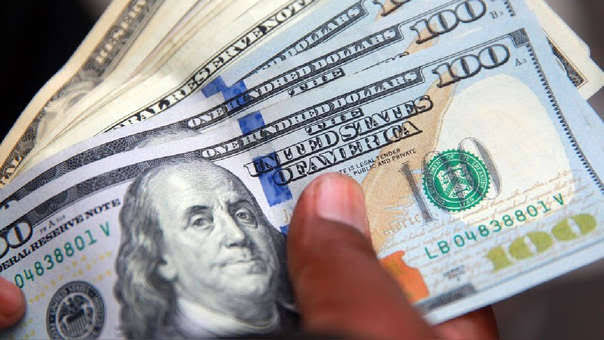
  2. The Federal Reserve holds a monopoly on the issuance of currency in the USA. In essence, this is the power to borrow an infinite amount of money at 0%. The dollar bill in your pocket is a 0% loan to the Federal Reserve. The Federal Reserve then uses these 0% loans to purchase income-producing assets. Before 2008, the assets purchased were primarily Treasury debt, which is backed by the taxation power of the US Government. In other words, we are exchanging the property rights to our valuable assets (land, labor, entrepreneurship) for little slips of green paper to buy trinkets with. The government can then tax these valuable assets to pay for our excess. The more we spend, the more the Fed owns.
  3. If all money created is debt and counts as principal, where does the money come from to pay interest on this debt? It comes from the money that gets printed in the future. This is why inflation is a natural result of our current monetary system.
  4. Prior the the Emergency Economic Stabilization Act/TARP Act of September 2008, commercial banks were required to hold 10% of deposits as reserves. This placed a limit on the potential amount of money creation at around 9x the original deposit. An obscure clause in the TARP Act changed the reserve requirement to 0%, immediately making the potential money supply infinite.
  5. The reason for the credit spread blowups of October/November 2008 was because in the same TARP Act the Fed was allowed to pay interest on deposits without publicly stating the interest rate. Before the TARP Act, there was around $20 billion deposited by commercial banks at the Fed. After the TARP Act, deposits immediately jumped 50x to $1 TRILLION. This resulted in a disappearance of demand for risky assets, which led to blowouts in credit spreads.
  6. As a result of various acts of Congress in 2008, the Federal Reserve now has the authority to buy all sorts of assets (commercial paper, corporate bonds, mortgage loans, etc.). A cynical person would say this essentially allows the Fed to seize all valuable assets in this country directly by exchanging fancy bits of green paper for them without having to go through the intermediate step of coercing the US Government into spending more money and taking on more debt.
  7. Much of the Fed's activity is not made public because of the use of off-balance sheet vehicles.
  8. There is debate over the constitutionality of the Fed's various awesome powers.

What does this all mean? This economic crisis will not become a depression. By employing the new tools of monetary policy that the Fed has created for itself (interest on reserves and direct asset purchases), the money supply can be jerked around as if on a string. Initially, this means we will soon experience another period of easy credit and unsustainable economic growth.

However, the end result of current policies is that the Fed will be powerless to stop the next economic crisis. Assuming no outside shocks (another big war, nuclear attack, etc.), the dollar will over time lose its status as the reserve currency, and we will experience a currency crisis followed by rampant inflation at some point down the road. Share/Save/Bookmark

Originally published on SeekingAlpha.com.

_____

© 2009 Jeff Chen

ABOUT THE AUTHOR

Jeff Chen is a contributor to Seeking Alpha.
Disclaimer: The opinions expressed above are not intended to be taken as investment advice. It is to be taken as opinion only and I encourage you to complete your own due diligence when making an investment decision.

This article has been favorited 1 time on DollarDaze.org | Make this your favorite article

Posted in Monetary Commentary, Guest Commentary, Jeff Chen

Comments (1)

Posted by Yann on January 21st, 2009:

Hi,
Nice reading !
I would like to add something. You wrote "Prior the the Emergency Economic Stabilization Act/TARP Act of September 2008, commercial banks were required to hold 10% of deposits as reserves."
In fact reserve requirements are only 3% of liabilities between $10.3 Million - $44.4 million and 10% above.

Leave a Comment on this Article
8 Important Facts About the Federal Reserve by Jeff Chen

Your Name

Create Password This password is used to make future edits to your comments.

Enter $6789 Enter the green text exactly as it appears.

Comments

1056450
 
Search DollarDaze
  • Add to Technorati Favorites
Your Purchasing Power
  • Click to see full-sized charts
Web Media
  • Aaron Russo Interviews Congressman Ron Paul
  • Excellent video explaining the US Federal Reserve
  • Money As Debt
  • I.O.U.S.A.
  • Chris Martenson - The Crash Course
  • Money - A Brief History of the American Dollar
Sponsored Ads
London Metal Exchange
  • Click to see full-sized charts
Sponsored Ads
Donations Accepted


  • Help support the development of DollarDaze.org by donating today.

    Click here to learn about other ways you can help us.