20 Latest Posts
Topic Categories
Commodity Charts
External Links
Recommended Books
|
On June 25th, the Fed made no changes in its key interest rates and issued a statement that underscored how narrow their room for maneuver had become. Caught between the opposing forces of economic contraction and inflation, the Fed revealed that it was locked in neutral. Given that the Fed must use opposite remedies to satisfy the demands of its dual mandate (higher rates to curb inflation and lower rates to stimulate growth), the Fed is stuck firmly in neutral. There appears to be nothing left to do except to talk and hope for the best. This inaction did not inspire confidence. The market sell-off in the days since the meeting has accelerated the swoon that has seen American stocks down by some 20 percent in the first six months of 2008. It is now official: the 'bear' market has begun. Although leading policy makers do not dare to utter the name, the conditions currently confronting the Fed are known as "stagflation". However, America is not the only major economy facing this grizzly beast. The European Union is also coming to grips with the problem. The difference in the manner that the America and Europe deal with the issue could make a huge impact on the world economy for years to come. Unlike the American Fed, the European Central Bank (ECB) has only a single mandate; to curb inflation. Further, the ECB is based in Germany and is infused with a distinctly Germanic ethos. Although the bank president is in fact a Frenchman, Monsieur Jean-Claude Trichet, his policy moves firmly root him in the Teutonic financial tradition. It is widely known that, since its terrible experiences with hyper-inflation after World War I, the Germans have developed an ingrained intolerance of inflation. As a result, the ECB has shown a backbone that is completely lacking among the invertebrates at the Federal Reserve. The resulting confidence has led many holders of U.S. dollars, including central banks, to diversify major parts of their vast holdings of U.S. dollar trade surpluses into the Euro. In just eight short years, this vast transfer of money has made the relatively young Euro the second most important currency in the world. There are now more Euros in physical circulation than there are U.S. dollars. Also, the Euro has risen in price by some 64 percent since its launch in 2000, to $1.64. This is all the more extraordinary, when one considers that Europe does not have either a single economy or even a single government. As yet, it is still only an association of governments! Of course, much of the credit for the astounding rise of the Euro must go to the massive debasement of the U.S. dollar, a debasement that has robbed every single man, woman and child who holds or invests in dollars. The debasement of the U.S. dollar started way back in the 1970s, with the choice of inflation, over taxation and debt, as the means of financing the unpopular Vietnam War. It was enhanced by President Nixon's breaking of the U.S. dollar/gold 'exchange window' in 1971. Since then, the American economy has tragically become transformed from that of a 'producer' base to one of a 'consumer' base. Some may wonder why the holders of vast U.S. dollar reserves, such as central banks around the world, could tolerate this continued dilution of their dollar wealth. The answer, of course, was that there was no alternative. The American economy dominated the world and its dollar was 'King' largely because it was the undisputed 'reserve' currency. As a result, almost all internationally traded commodities were priced in U.S. dollars. In addition, many nations, including OPEC countries and China, have decided to peg their currencies to the dollar. Finally, all international oil producers demanded payment in U.S. dollars. This meant that a Swiss buyer of oil had first to purchase U.S. dollars in order to buy oil. The result was that the 'reserve' status provided a massive underpinning for the U.S. dollar and has long delayed its decline. Today however, things have changed, dramatically. Many oil producers now demand Euros in payment for oil. Important nations have abandoned the dollar as a peg for their currencies. Worst of all, the debasement of the U.S. dollar is fast eroding faith in paper money. There is now rising, but so far hidden, pressure for a more reliable international 'reserve' currency. The most obvious choice would be the Euro, especially after the expected European unification treaty of Lisbon is finally ratified in 2009. If it is, one can expect increasing pressure to have the Euro adopted as a replacement or as an alternative international reserve currency. If the U.S. dollar loses or even has to share its 'reserve' status, it will become increasingly vulnerable to a panic run. The July 3rd meeting of the ECB is likely to prove crucial. If the Germanic view wins out and the ECB raises its rates, it risks both a run on the dollar and the possible loss of the dollar's 'reserve' status. If such a move were adopted, it would involve a further international risk; the pushing of a looming recession into a depression, just as it did in 1930, when the same anti-inflation sentiment prevailed.
_____ ABOUT THE AUTHOR
Disclaimer:
The opinions expressed above are not intended to be taken as investment advice. It is to be taken as opinion only and I encourage you to complete your own due diligence when making an investment decision.
Posted in Monetary Commentary, Guest Commentary, John Browne
GLOBAL INFLATION: The next major obstacleOne thing we find truly amazing about the markets is that they're much more than just investments. Markets provide a way of peeking into the future, if you understand what they're trying to tell you. These lessons are ongoing but it's fascinating and like a giant puzzle. MARKETS TELL THE STORYSometimes the messages are pretty subtle. But other times they're major, signaling massive economic, political or geopolitical shifts. Most interesting is that the markets lead. So it's important to recognize that whatever a market is telling you, it's not going to be obvious when that market gives the signal. The message will become obvious later. Let's take gold as an example. It started moving up in a major bull market in 2001, and it's been rising strongly and consistently ever since. Gold always leads inflation, so it was telling us that inflation was eventually going to head higher. That didn't happen for quite a while, but now it's another story. Plus, gold's been telling us much more... INFLATION ON THE AGENDAWe've been writing about inflation for a long time and why we thought it was coming back in a big way. As the years passed, the evidence became more overwhelming. But most people haven't been paying much attention. Aside from concerns about high oil and food prices, there are plenty of other things that are more worrisome. In the U.S., for instance, consumer confidence fell to a nearly 30 year low and a recent poll showed that 81% feel that the U.S. is on the wrong track. This is primarily due to the war, the slowing economy and the housing situation. And while these conditions remain serious, along with a slew of other concerns, like the heavy debt load, soaring foreclosures and so on, it's important to recognize that this is the current situation. It's not what's coming. What's coming is higher inflation and it could prove to be more serious than most people think, at least based on what we're now seeing. NOW IT'S HERE...Suddenly, there's a lot of talk about inflation in official circles and that wasn't the case before. But over the past couple of months, comments or inflation warnings were made by the Fed, the European Central Bank and the Bank of England. Government officials are speaking out, and so is the press. The International Monetary Fund was the most direct, warning that global inflation has re-emerged as a major threat to the world economy. As we've often pointed out, inflation has been creeping back and it's gaining momentum. In the past six months, for example, we've seen some huge double digit annualized jumps in U.S. wholesale prices, along with soaring money supply. But what's happening in other countries is even more interesting and it's intensifying the global inflation concerns, which gold saw coming way back when. Globalization boom...As you know, many developing nations have been booming, thanks to globalization. This is taking place all over the world and this growth is much greater than in the developing countries. It's estimated that half of the world is leaving poverty behind as standards of living improve. That's especially true of the BRIC countries, which are the emerging market leaders (Brazil, Russia, India and China). It's also true of many Asian countries, as well as many of the Eastern European, Middle Eastern and Latin American countries. As living standards improve, people in emerging nations are able to buy things they couldn't afford before, like food and cars. This has greatly increased demand, and it's put massive upward pressure on agricultural commodities and oil. It's actually been the driving force behind the commodity boom. Heating inflationOver the years, we've taken quite a few trips to developing countries and we've seen grueling poverty up close. It's a terrible situation and the fact that millions of people are escaping this lifestyle is a good thing, but like most things, there's a price to pay. In this case, it's inflation (see Chart 1).
As you can see, inflation is picking up in most countries (remember, many countries are not shown on this chart). Aside from Argentina, for example, inflation is above 15% in many more emerging countries like Vietnam, Latvia, Estonia, Pakistan and Egypt. It's more than 10% in a lot of other countries and it's a huge concern in Russia, China and India. The bottom line is that inflation is at a 10 year high in emerging countries and The Economist says that two-thirds of the world's population will probably suffer double-digit inflation rates this Summer. This is a huge deal and it explains why officials are concerned, but there's more... SOARING MONEY SUPPLY... GLOBALLYGlobal monetary policy is now the loosest since the 1970s and money supply is growing almost three times faster in emerging countries than in the developed world (see Chart 2). As you know, that's the direct cause of inflation.
Plus, as The Economist points out, there are alarming similarities between emerging economies today and the rich world in the 1970s when the Great Inflation took off. For example, in many emerging countries policymakers view the inflation rises as a short-term phenomenon and they're taking superficial measures to deal with it. So the causes are similar and the results will be the same for everyone, no matter where you live. As we're already seeing, commodities, food, oil, building materials and so on... they're all going up. IN SUMMARYIt's still to be seen how this will end. But so far, this inflation rise is coinciding almost perfectly with the 200 year commodity cycle we've often shown. If this continues, and we believe that it will, then there's a lot more inflation to come in the years ahead. What's currently happening also strongly favors the outlook for gold and the other commodities. It's going to boost demand for gold as a safe haven during inflationary times and these ongoing developments are telling us to stay with our gold and precious metals positions. In fact, gold's been telling us this all along. Now we're starting to see why.
_____ ABOUT THE AUTHORS
Disclaimer:
The opinions expressed above are not intended to be taken as investment advice. It is to be taken as opinion only and I encourage you to complete your own due diligence when making an investment decision.
Posted in Monetary Commentary, Guest Commentary, Mary-Anne & Pamela Aden
The following charts are made from data compiled at the London Metal Exchange.
_____ ABOUT THE AUTHOR
Disclaimer:
The opinions expressed above are not intended to be taken as investment advice. It is to be taken as opinion only and I encourage you to complete your own due diligence when making an investment decision.
Posted in Metals, Mike Hewitt
At the time of writing this article, the current US Federal Debt stands at $9.357 trillion. The sheer magnitude of that number is difficult to comprehend. In order to illustrate just how large that number is consider the following...
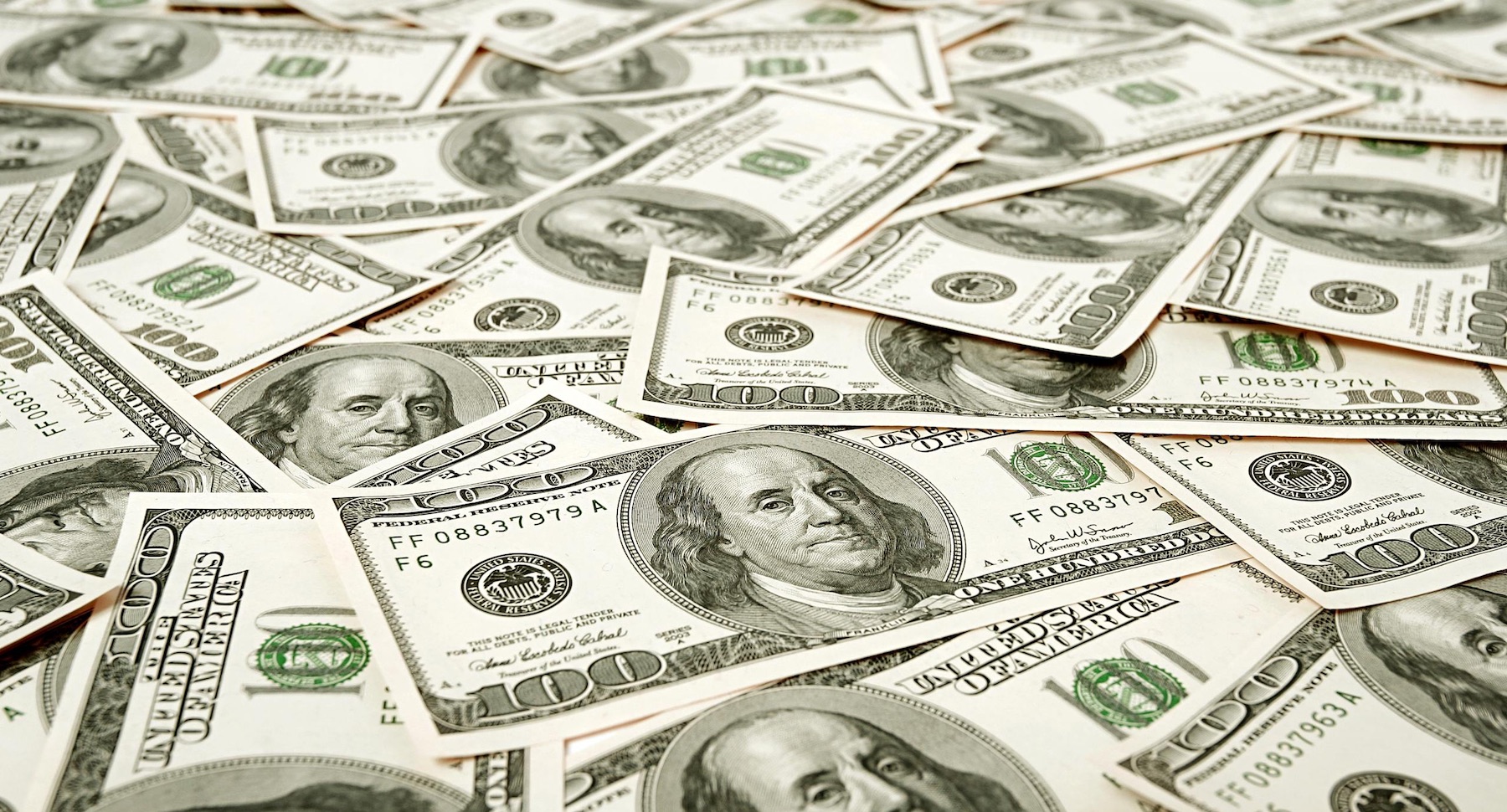
The size of a dollar bill is 6.6294 cm wide, by 15.5956 cm long, and 0.010922 cm in thickness. It would take approximately 96,721,648 dollar bills to make up one square kilometre. If we were to cover an area with enough dollar bills equal to the current US debt it would have an area of 91,846 square kilometres which would cover more than the entire state of Maine! When stacked, the number of dollar bills required to represent the US debt would be 1,021,963 km high. This is more than 2.5 times the distance to the moon! Laid end to end the dollar bills would measure 1,459,268,344 km. Saturn at its furthest distance from the Sun is 1.5 billion kilometers and can be as close as 1.35 billion kilometers. Thus, if the dollars bills were laid end to end, they would reach the orbit of Saturn!
_____ ABOUT THE AUTHOR
Disclaimer:
The opinions expressed above are not intended to be taken as investment advice. It is to be taken as opinion only and I encourage you to complete your own due diligence when making an investment decision.
Posted in Monetary Commentary, Mike Hewitt
"Paper money eventually returns to its intrinsic value - zero." (Voltaire, 1694-1778) The first well-known widespread use of paper money was in China during the Tang (618-907 A.D.) dynasty around 800 A.D. Paper money spread to the city of Tabriz, Persia in 1294 and to parts of India and Japan between 1319 to 1331. However, its use was very short-lived in these regions. In Persia, the merchants refused to recognize the new money, thus bringing trade to a standstill. By 1455, after over 600 years, the Chinese abandoned paper money due to numerous problems of over issuance and hyperinflation. Figure 1. This Kuan note is the oldest known banknote in the world. It was made in China circa 1380. Paper money did not arrive in Europe till 1633 with the earliest known English goldsmith certificates being used not only as receipts for reclaiming deposits but also as evidence of ability to pay. In 1656, the Bank of Sweden is founded with a charter that authorizes it to accept deposits, grant loans and mortgages, and issue bills of credit. By 1660, the English Goldsmiths' receipts became a convenient alternative to handling coins or bullion. The realisation by goldsmiths that borrowers would find them just as convenient as depositors marks the start of the use of banknotes in England. In 1661, the Bank of Sweden becomes first chartered bank in Europe to issues notes known as the paper daler.
Figure 2. A 50-Daler note from the Bank of Sweden issued in 1666. At present there are 177 currencies being used in the world. Below is a list containing all currencies currently in circulation. Not all currencies are widely used and accepted, such as the various banknotes of the pound sterling.
The median age for a live currency is 37 years and at least one, the Zimbabwe dollar, is in the throes of hyperinflation. Excluding the early paper currencies of China up until the 15th century and the majority of paper currencies that existed in China until 1935, there are 609 currencies no longer in circulation. Of these, at least 153 were destroyed as a result of hyperinflation caused by over-issuance. The remainder were revalued, destroyed by military occupation/liberation, renamed for political reasons, or were converted to another currency. The median age for these currencies is only seventeen years.
| ||||||||||||||||||||||||||||||||||||||||||||||||||||||||||||||||||||||||||||||||||||||||||||||||||||||||||||||||||||||||||||||||||||||||||||||||||||||||||||||||||||||||||||||||||||||||||||||||||||||||||||||||||||||||||||||||||||||||||||||||||||||||||||||||||||||||||||||||||||||||||||||||||||||||||||||||||||||||||||||||||||||||||||||||||||||||||||||||||||||||||||||||||||||||||||||||||||||||||||||||||||||||||||||||||||||||||||||||||||||||||||||||||||||||||||||||||||||||||||||||||||||||||||||||||||||||||||||||||||||||||||||||||||||||||||||||||||||||||||||||||||||||||||||||||||||||||||||||||||||||||||||||||||||||||||||||||||||||||||||||||||||||||||||||||||||||||||||||||||||||||||||||||||||||||||||||||||||||||||||||||||||||||||||||||||||||||||||||||||||||||||||||||||||||||||||||||||||||||||||||||||||||||||||||||||||||||||||||||||||||||||||||||||||||||||||||||||||||||||||||||||||||||||||||||||||||||||||||||||||||||||||||||||||||||||||||||||||||||||||||||||||||||||||||||||||||||||||||||||||